

Meet Mico, ER Group's ultra-trail runner taking on the Beachcomber Trail 2026
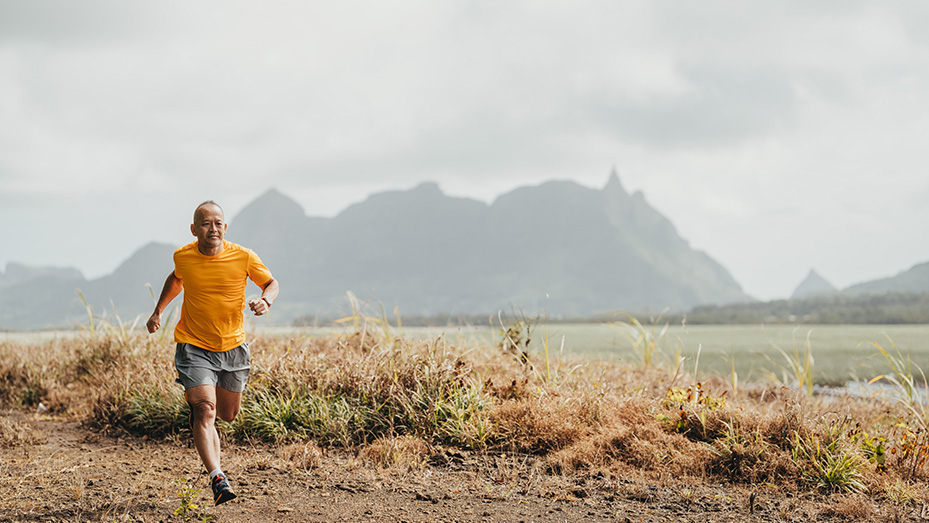
On 25 July 2026, Mico, our team member from ER Agri, will line up at the start of the Beachcomber Trail's 65 km race. Ahead of race day, we asked him about the mental side of ultra-trail running, what goes into his backpack, and why he keeps coming back.
Mico's journey is one of many reasons we are proud to return as Gold Sponsor of the Beachcomber Trail 2026, an event that brings together endurance, community spirit and the talents of our island.
At what point during a long trail like the 65 km does the race become more mental than physical?
Honestly, somewhere around the 50k mark, when your legs already have a story to tell, but the finish line still feels impossibly far away. Every hill stops being just a climb; it turns into a conversation with yourself. You’re not fighting your body anymore; you’re negotiating with your mind. And the sooner you realise your legs will keep moving if your head tells them to, the sooner you become unstoppable. Mind over the body!
What is one mistake runners often make in ultra-trails that experience has taught you to avoid?
Starting too fast. It’s the rookie error I still see all the time: going out with fresh legs and letting adrenaline hijack those first few kilometres. It’s far better to feel you still have gas in the tank 20k from the finish line than to realise you don’t 20k after the start!
Why do you keep coming back to trail running despite the difficulty?
I don’t consider myself a true runner, which is why I keep coming back to continue my learning journey. I love trail running not just as a physical activity but as an intellectual one, too. I’ve read many, many scientific papers on the many sides of running. Trail running gives me the chance to test all those theories. The learning and execution are followed by meticulous post‑activity analysis of every physiological and performance parameter. It’s amazing how the body has the innate ability to adapt and deliver for you.
The difficulty you mention is also an opportunity for me to test how I react when pushed to my limits. As I always say, in life nothing is meant to be easy, and whatever is thrown at you, accept it and live with it. Out there, you learn to embrace discomfort. The trail doesn’t care about your age, gender, or social class – it simply asks you to be present and to respect it. Nothing is given; everything is earned through the currency of your sweat.
But trail running is more than just running. It’s also about the trail community, where you meet beautiful souls connected by a love of nature, a sense of freedom, discipline, pain, and the continuous search for self‑improvement."
What is in your trail bag, and why?
Water for rehydration (enough to reach the next aid station, plus a little extra), a waterproof jacket (weather in the mountains changes fast), and a few bags of sugar for quick fuelling. The most important items are my goodies: my chocolate wafers and, above all, my “Macaroni cakes”, comfort food I reach for when the journey gets tough.
I also carry a few bags of electrolytes: table salt, magnesium malate, and potassium citrate, because they are essential for muscular and nervous system function. A headlamp, because while I know when I’m starting, I never know exactly when I’ll finish. A Saharan cap to protect me from the sun’s radiation (I tend to overheat), and a packet of baby wipes just in case of emergency. My bone conduction headphones let me escape into my favourite 80s music whenever boredom starts to creep in. And a fully charged phone to reach the outside world if I need help.
Do you have any nutrition tips for runners?
Train your gut just like you train your legs. Never try anything new on race day. Practise eating the exact foods you’ll rely on during the race – on your long runs, whether it’s gels, real food, energy drinks, or something else. The general consensus is to have a minimum of 30- 60 g of carbohydrate per hour. Rehydration is non-negotiable, about 750ml/hour than can go up to 1 litre/hour during very hot days. Find what works and what doesn’t. Your stomach is your partner; learn what it likes and listen to it.
Stories like Mico's remind us that the strongest performances are often shaped by what happens off the trail: the preparation, the curiosity, the community. We are proud to support him, and we wish him good luck as he takes on this next challenge.

- ER Agri
- Agrïa
- ER Commercial